Medically Reviewed by Dr. Kelvin Wong, DDS on September 23, 2026
You know you want a better smile, but figuring out which cosmetic treatment actually gets you there is where things get confusing. Teeth whitening and veneers both produce dramatic results and both address the appearance of your teeth, but they solve very different problems. Choosing between them without understanding that distinction can lead to investing in the wrong treatment, or missing out on one that could have genuinely transformed your smile.
At Cedar Smiles Dental, our cosmetic dentistry services include both professional whitening and porcelain veneers, and Dr. Kelvin Wong takes the time during every consultation to understand exactly what a patient wants to change before recommending anything. The right answer depends entirely on your goals, the current condition of your teeth, and what kind of result you are looking for.
What Does Teeth Whitening Actually Fix?
Professional teeth whitening is designed to address one specific problem: discoloration caused by staining. Coffee, tea, red wine, tobacco, and certain foods are the most common culprits, and whitening agents work by penetrating the enamel and breaking down the pigment molecules responsible for those surface and deep stains.
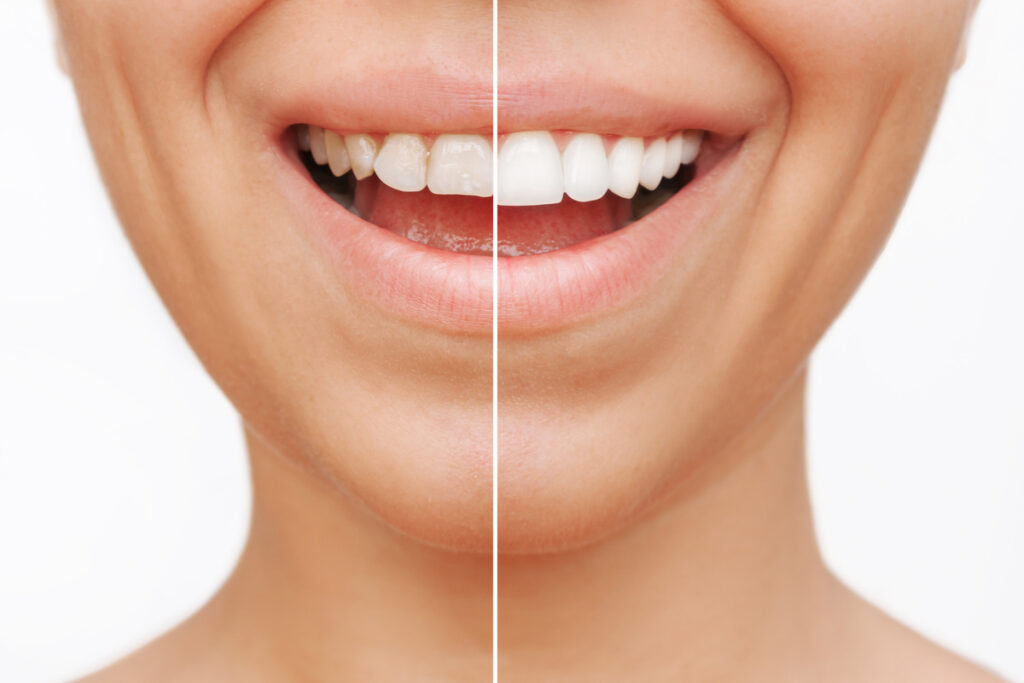
The results can be striking, especially for patients whose teeth are structurally healthy but have dulled over time. Whitening does not change the shape, size, or alignment of teeth, and it cannot correct chips, cracks, or uneven edges. It also has no effect on existing dental restorations like crowns, veneers, or tooth-colored fillings. For the right candidate, professional whitening is one of the fastest and most affordable ways to refresh a smile.
What Can Veneers Do That Whitening Cannot?
Porcelain veneers are ultra-thin shells custom-crafted to bond to the front surface of a tooth, covering it entirely. Because they replace the visible surface of the tooth rather than treating it, veneers can address a much broader range of cosmetic concerns in one step.
Patients who benefit most from veneers typically have one or more of the following: teeth that are chipped, worn down, or have uneven edges; stubborn intrinsic staining caused by medications like tetracycline, fluorosis, or developmental factors that do not respond to whitening; or a desire to close minor gaps, reshape teeth that are too small, or achieve a specific shade of white that goes beyond what whitening can realistically produce. According to the Cleveland Clinic, veneers last on average 10 to 15 years with proper care, making them a long-term investment in a transformed smile.
How to Know Which One Is Right for You
The most honest answer is that the right choice depends on what you actually want to change. Whitening is the right tool when your primary concern is the color of otherwise healthy, well-shaped teeth. It is non-invasive, requires no alteration of tooth structure, and produces results in a short amount of time.
Veneers are the right tool when you want to address shape, size, texture, or stubborn discoloration along with color, or when you want a result that goes beyond what bleaching can offer. They are also worth considering if you have multiple cosmetic concerns and want to address them comprehensively rather than piecemeal. A few other factors worth thinking through before your consultation:
- Current tooth color: Whitening works best on yellow or light brown staining. Gray or blue-toned discoloration, often linked to medications or trauma, rarely responds well and may require veneers instead.
- Tooth structure: If a tooth is chipped, short, or misshapen, whitening will brighten it but leave the structural issue intact. Veneers correct both at once.
- Budget and timeline: Whitening is significantly less expensive and can be completed quickly. Veneers involve a greater upfront investment but deliver longer-lasting, more comprehensive results.
- Commitment to maintenance: Whitening results fade over time and typically require periodic touch-ups. Veneers hold their color and shape for many years with proper care and routine preventive dental visits.
There is no wrong answer, just the one that fits your goals. If you are unsure which direction makes more sense, a consultation is the best place to start rather than a guess.
Can I get veneers if my teeth are not perfectly straight?
Veneers can mask minor spacing issues and slight misalignment, but they are not a substitute for orthodontic treatment when crowding or significant misalignment is involved. In cases where teeth are considerably out of position, Dr. Wong may recommend addressing alignment first, whether through clear aligners or another approach, so the veneers can be designed to sit properly on well-positioned teeth. The result is more predictable and more durable when the underlying foundation is sound.
How white can I make my teeth with professional whitening?
Professional whitening can achieve results several shades brighter than your current tooth color, though the exact outcome depends on the nature of the staining and how your enamel responds to the whitening agent. In-office treatments use higher concentrations than store products and are applied under professional supervision, which allows for more controlled and more significant results. Some patients find that combining in-office treatment with take-home trays for maintenance delivers the most impactful and lasting outcome.
Do veneers damage your natural teeth?
The veneer process does require a small amount of enamel to be removed from the front surface of the tooth, typically less than a millimeter, to create space for the veneer to bond without adding bulk. This step is permanent, meaning the tooth will always require a veneer or crown afterward. The amount of tooth reduction is generally minimal compared to what is required for a crown, and the procedure is considered safe and routine when performed by an experienced cosmetic dentist. Patients considering veneers should understand this commitment before moving forward.
How long does teeth whitening last?
Professional whitening results typically last one to three years before noticeable fading occurs, though this varies widely depending on diet and lifestyle habits. Coffee, tea, red wine, and tobacco are the primary contributors to staining, and patients who consume these frequently will likely see faster fading. Periodic touch-up treatments, either in-office or with take-home trays, can maintain brightness over time. Avoiding the main staining culprits in the weeks immediately following whitening helps preserve results longer.
Find the Right Smile Solution at Cedar Smiles Dental
At Cedar Smiles Dental in Somerset, NJ, the goal is never to steer patients toward the most expensive option. Dr. Kelvin Wong listens first, assesses your teeth thoroughly, and gives you an honest picture of what each option can realistically deliver for your specific situation. Flexible financing through CareCredit and Cherry is available to help make cosmetic care accessible on any budget.
Whether whitening is the right fit or veneers are what your smile actually needs, our team is here to help you get there. Contact our office to schedule your cosmetic consultation at our Somerset, NJ practice today.
ABOUT THE AUTHOR
Dr. Kelvin Wong, DDS
Dentist at Cedar Smiles Dental, Somerset, NJ
Dr. Kelvin Wong earned his Doctor of Dental Surgery degree from NYU College of Dentistry and is a Fellow of the International Congress of Oral Implantologists (ICOI). He completed advanced training at the Kois Center and brings scientific expertise and compassionate care to his private practice in Somerset, NJ.


