
Losing a tooth sets off a chain reaction most people don’t anticipate. Neighboring teeth start to drift, chewing becomes uneven, and the jawbone beneath the gap begins to lose density simply because it’s no longer being used.
Cedar Smiles Dental serves Princeton and the wider region from our Somerset, NJ office, where Dr. Kelvin Wong treats implant planning as a genuinely collaborative process rather than a standardized script.

An implant replaces a missing tooth in layers. A titanium post takes the place of the root, and over several months it fuses with the surrounding jawbone through a process called osseointegration. Once that bond is solid, a custom crown is attached on top, finishing a restoration that functions the way the original tooth did.
Large-scale data backs up just how reliable this process has become. A retrospective analysis of nearly 159,000 implants placed alongside bone grafting found a 97.83% clinical success rate, with most of the small number of failures occurring within the first year.
Bone needs regular stimulation to stay strong, and that stimulation typically comes from the pressure of a tooth root during chewing. Once a tooth is gone, that pressure disappears, and the bone underneath can begin thinning within months. An implant post reintroduces that stimulation, which is one reason it protects long-term jaw structure in a way a bridge or denture cannot.
Not every patient needs the same kind of implant-supported restoration, and Dr. Wong tailors the approach to how many teeth need replacing. A single implant with a custom crown replaces one missing tooth without touching the teeth next to it. For three or more adjacent missing teeth, an implant-supported bridge anchors a multi-tooth restoration on as few as two implants. Patients missing most or all of their teeth in an arch may be better suited to implant-supported or implant-retained dentures, which snap securely into place and eliminate the slipping and adhesives that come with traditional dentures.
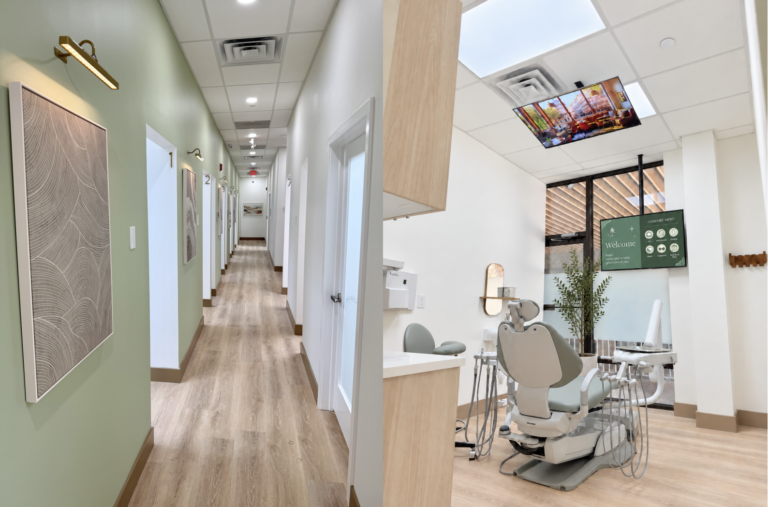
A consultation at Cedar Smiles looks closely at a handful of factors before any plan gets proposed:
The process starts with a detailed evaluation, including digital scans that map precisely where the implant needs to sit. Once integration is confirmed, your custom crown is attached and adjusted until the bite feels right. For patients weighing the cost, financing options are available.
Most cases take a few months from placement to final crown, since the post needs time to fuse with the jawbone before the permanent restoration is attached. Dr. Wong will give you a specific timeline based on your imaging and healing progress.
The placement procedure is done under local anesthesia, so patients typically feel pressure rather than pain. Mild soreness for a few days afterward is normal and manageable with over-the-counter pain relief.
A traditional bridge relies on your natural teeth on either side of the gap for support, which means those teeth have to be reshaped. An implant-supported bridge anchors to implants instead, so neighboring healthy teeth are left untouched.
Coverage varies by plan, and many provide at least partial coverage for implant treatment. Our team is happy to review your specific benefits and walk through financing options before treatment begins.
Convenient Care in Somerset